
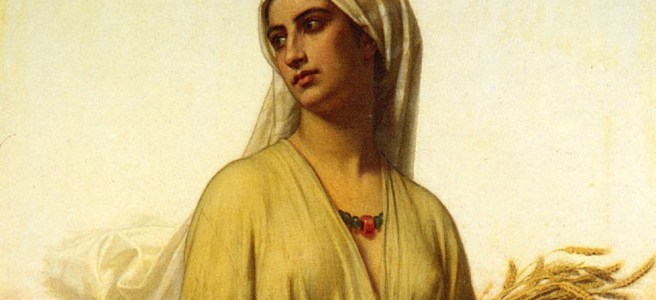
By: Matthew D. Dyer
(This article is taken from the book A Case for Biblical Kinism)
Another supposed example of multiculturalism is the marriage of Ruth and Boaz. Many people would object to kinism by saying: “What about Ruth? She was a Moabitess, and they were forbidden to marry into, yet she is in the genealogy of Jesus, so this means Jesus comes from a mixed lineage. Therefore, interracial marriage is acceptable.” If this position is true, then there are HUGE theological ramifications because of it. It would make Ezra, Nehemiah, and the Israelites that separated from their Moabite wives because it was a transgression of God’s Law a bit foolish, because God had already allegedly allowed a Moabite to enter into the congregation of Israel and the genealogy of the Messiah mingling the holy seed (Ezra 9:2).
It would also mean that King David and all the kings of Judah were illegitimate and not truly Kings over Israel because God commanded that a Moabite shall not enter into the congregation of Israel (Deuteronomy 23:3,6) even to the tenth generation. David was the great-grandson of Ruth, this would disqualify him as King. More importantly, this would disqualify Jesus the Christ, as a descendant of David, from being King over Israel because a forbidden lineage was in His genealogy.
Rather Ruth was not a Moabitess by race, but a Moabitess because she was born and lived in the land known as the country or plains of Moab which had previously been conquered by Israel.
Ruth 1:1 states:
“Now it came to pass in the days when the judges ruled, that there was a famine in the land. And a certain man of Bethlehemjudah went to sojourn in the country of Moab, he, and his wife, and his two sons.”
At the very beginning of the Book of Ruth, we see that the events of the book took place during the times the judges ruled, and that an Israelite man named Elimelech went and sojourned in the country of Moab due to famine. The “country of Moab” is a specific region of land that was conquered by Israel known as the “plains of Moab.” The Hebrew word śāḏê[1] means a field or open plain. The reason this is important is the Israelites after the Exodus, migrated to the land of Moab, which was on the east side of the Jordan River at Jericho (Numbers 21:13-20). At this time the Amorites had previously taken the plains of Moab from the Moabites, and then Israel engaged the Amorites in war and defeated their king, and took possession of the plains of Moab (Numbers 21:21-32).
Numbers 22:1 states:
“And the children of Israel set forward, and pitched in the plains of Moab on this side Jordan by Jericho.”
The rest of the Book of Numbers, and almost all of the Book of Deuteronomy, transpire in the region known as the “plains of Moab” and it was named such because it once belonged to the Moabites, but was now in the posession of the Israelites.The 17th century theologian Matthew Poole in his biblical commentary on Numbers 22:1 states the following concerning the plains of Moab:
“The plains of Moab — Which still retained their ancient title, though they had been taken from the Moabites by Sihon, and from him by the Israelites.”
Charles Ellicott wrote in An Old Testament Commentary for English Readers on Numbers 22:1 states the following concerning the plains of Moab:
“These plains had belonged to Moab, and, since the victory over the Amorites, were possessed by the Israelites.”
The region known as the plains of Moab was in the possession of the Israelites. It was there that the Law of God was read to the Israelites forty years after their Exodus out of Egypt.
Deuteronomy 1:3-5 states:
“And it came to pass in the fortieth year, in the eleventh month, on the first day of the month, that Moses spake unto the children of Israel, according unto all that the LORD had given him in commandment unto them; After he had slain Sihon the king of the Amorites, which dwelt in Heshbon, and Og the king of Bashan, which dwelt at Astaroth in Edrei: On this side Jordan, in the land of Moab, began Moses to declare this law, saying,”
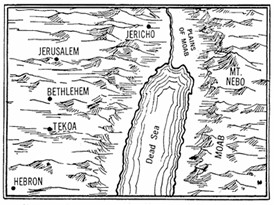
Israel dwelt in this land for a number of years until Moses died in that land (Deuteronomy 32:49, 50, 34:5), and before Joshua began his conquest in the land of Canaan.The tribe of Reuben, Gad, and the half tribe of Manasseh desired to stay in the plains of Moab before the conquest, and Moses granted this to them on the condition that they participated in the conquest of Canaan (Deuteronomy 3:12-16, Numbers 32:32-42). Those tribes had lived in that land for a number of years, and grew to like it. When the conquest begun in Canaan, Joshua reminded these tribes that they had to fulfill their responsibility to help their brethren, and then they could return to the land which Moses had promises them, and they agreed and crossed over the Jordan.
Joshua 1:12-15 states:
“And to the Reubenites, and to the Gadites, and to half the tribe of Manasseh, spake Joshua, saying, Remember the word which Moses the servant of the LORD commanded you, saying, The LORD your God hath given you rest, and hath given you this land. Your wives, your little ones, and your cattle, shall remain in the land which Moses gave you on this side Jordan; but ye shall pass before your brethren armed, all the mighty men of valour, and help them; Until the LORD have given your brethren rest, as he hath given you, and they also have possessed the land which the LORD your God giveth them: then ye shall return unto the land of your possession, and enjoy it, which Moses the LORD’S servant gave you on this side Jordan toward the sunrising.”
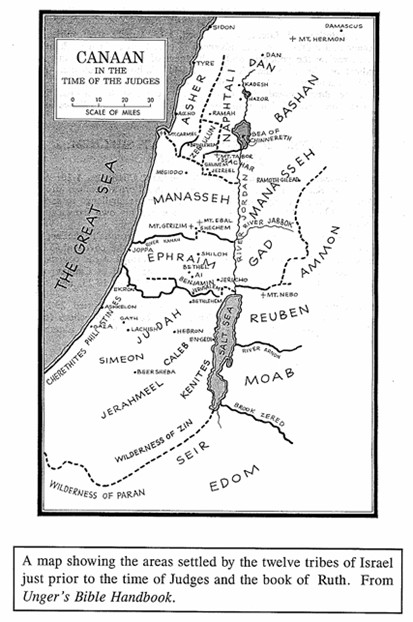
After the conquest of Canaan, the land east of the Jordan river was divided among the tribes of Reuben, Gad, and half of Manasseh (Joshua 13:8-32, 18:7, 22:9). These Israelite tribes continued to live in what was known as the plains of Moab up to the time of the Judges, even though it was still called by the name of Moab. This is not uncommon even today. There are many places in America that still possess the names of American Indian tribes, even though almost all those places have no Indians that live there anymore. My wife and I often visit the city of Natchez, Mississippi which is named after the Natchez Indians, and we have never seen an American Indian there, even though the town still retains the name of those people. The same thing happened to the plains of Moab that the Israelites inhabited.
The tribe of Reuben inhabited the region of Moab north of the river Arnon (Joshua 13:15-23). The Moabites had been forced south of the river Arnon just before the conquest of Canaan by the Amorites, which Israel defeated. The Mesha Stele (pictured to the right), also known as the Moabite Stone, was written by King Mesha of Moab around 840 B.C. The stone speaks about how the Israelite King Omri had been oppressing Moab, and many believe it is referring to events in 2 Kings 3:4–27. This stone was discovered four miles from the river Arnon, which seems to indicate even hundreds of years later the Moabites were still located in similar regions as during the days of the Judges.
The region known as the “country of Moab,” better rendered as the fields or plains of Moab, was in fact inhabited and possessed by Reubenite Israelites during the times of the Judges, and even many hundreds of years afterwards. Since the events in the Book of Ruth took place in “in the days when the judges ruled” (Ruth 1:1), this would make it highly unlikely that an ethnic Moabite would be living in the middle of Israelite territory since they were a forbidden lineage and an enemy of Israel. Instead, Ruth was known as a Moabitess because of the region in which she was born.
The Levirate Marriage
After Elimelech and his two sons died, leaving Naomi, Orpah, and Ruth all widows, Naomi hears news that the famine in the land of Judah, which was the reason for their family sojourning in the plains of Moab, was now gone and she decides to return home.
Ruth 1:6-14 states:
“Then she arose with her daughters in law, that she might return from the country of Moab: for she had heard in the country of Moab how that the LORD had visited his people in giving them bread. Wherefore she went forth out of the place where she was, and her two daughters in law with her; and they went on the way to return unto the land of Judah. And Naomi said unto her two daughters in law, Go, return each to her mother’s house: the LORD deal kindly with you, as ye have dealt with the dead, and with me. The LORD grant you that ye may find rest, each of you in the house of her husband. Then she kissed them; and they lifted up their voice, and wept. And they said unto her, Surely we will return with thee unto thy people. And Naomi said, Turn again, my daughters: why will ye go with me? are there yet any more sons in my womb, that they may be your husbands? Turn again, my daughters, go your way; for I am too old to have an husband. If I should say, I have hope, if I should have an husband also to night, and should also bear sons; Would ye tarry for them till they were grown? would ye stay for them from having husbands? nay, my daughters; for it grieveth me much for your sakes that the hand of the LORD is gone out against me. And they lifted up their voice, and wept again: and Orpah kissed her mother in law; but Ruth clave unto her.”
After Naomi informs her daughters-in-laws that she is going back home, she instructs them to go back to their mother’s household and gives them a blessing that the Lord deal kindly with them. Ruth and Orpah protested and desired to return with Naomi to “thy people.” Many may use this term “thy people” to prove that we are talking about different racial groups, but remember the context is Naomi returning back to the land of Judah, and the Judahites there which were her people. This does not mean people from the tribe of Gad or Reuben were not her people in a Israelite sense, but the people of Judah were her people in a tribal sense.
After Ruth and Orpah protested Naomi, she then tries to convince them to stay behind because she is old, and cannot give them anymore sons for them to marry, and that even if she had two sons right at that moment they would not be willing to wait for them to grow to a marriageable age. In our current culture, this exchange may seem a bit odd, but what Naomi is referring to is the Israelite Levirate Law (also referred to as Kinsman Redeemer Law), in which if a married man were to die before having children with his wife, that it was the responsibility of his brother to marry her, take care of her, and raise up a son in his brother’s name.
Deuteronomy 25:5-10 states:
“If brethren dwell together, and one of them die, and have no child, the wife of the dead shall not marry without unto a stranger: her husband’s brother shall go in unto her, and take her to him to wife, and perform the duty of an husband’s brother unto her. And it shall be, that the firstborn which she beareth shall succeed in the name of his brother which is dead, that his name be not put out of Israel. And if the man like not to take his brother’s wife, then let his brother’s wife go up to the gate unto the elders, and say, My husband’s brother refuseth to raise up unto his brother a name in Israel, he will not perform the duty of my husband’s brother. Then the elders of his city shall call him, and speak unto him: and if he stand to it, and say, I like not to take her; Then shall his brother’s wife come unto him in the presence of the elders, and loose his shoe from off his foot, and spit in his face, and shall answer and say, So shall it be done unto that man that will not build up his brother’s house. And his name shall be called in Israel, The house of him that hath his shoe loosed.”
If one takes the position that Ruth and Orpah were ethnic Moabites, it makes Naomi referring to the Levirate Law in Deuteronomy 25 very odd, since it seems she and Elimelech allegedly ignored the law in Deuteronomy 23 by allowing their sons to marry into the Moabite people. That position also puts Naomi’s character into even more of a question when we see in Ruth 2 and 3 that Naomi is encouraging Ruth to seek out her close relative Boaz in order that he may marry Ruth.
Ruth 2:20 states:
“And Naomi said unto her daughter in law, Blessed be he of the LORD, who hath not left off his kindness to the living and to the dead. And Naomi said unto her, The man is near of kin unto us, one of our next kinsmen.”
Ruth 3:1-2, 9-13 states:
“Then Naomi her mother in law said unto her, My daughter, shall I not seek rest for thee, that it may be well with thee? And now is not Boaz of our kindred, with whose maidens thou wast? Behold, he winnoweth barley to night in the threshingfloor… And he said, Who art thou? And she answered, I am Ruth thine handmaid: spread therefore thy skirt over thine handmaid; for thou art a near kinsman. And he said, Blessed be thou of the LORD, my daughter: for thou hast shewed more kindness in the latter end than at the beginning, inasmuch as thou followedst not young men, whether poor or rich. And now, my daughter, fear not; I will do to thee all that thou requirest: for all the city of my people doth know that thou art a virtuous woman. And now it is true that I am thy near kinsman: howbeit there is a kinsman nearer than I. Tarry this night, and it shall be in the morning, that if he will perform unto thee the part of a kinsman, well; let him do the kinsman’s part: but if he will not do the part of a kinsman to thee, then will I do the part of a kinsman to thee, as the LORD liveth: lie down until the morning.”
As we see in these passages, Ruth is seeking out Boaz as a close kinsman in order that he marry her and fulfill the Levirate Law. Boaz reveals there is another kinsman closer to Ruth than himself, and that he must first have permission from him in order to take Ruth as a wife. Boaz goes before ten elders of the city, and the kinsman who was closer to Ruth gives up his right to Boaz in order for him to marry her. If Ruth was an ethnic Moabite, this would put into question Boaz’s character and all the elders of the city who endorsed the forbidden marriage of a supposed Israelite to an Moabite. The only way the Scriptures harmonize in this instance, is if you understand that the “plains of Moab” was in fact Israelite territory, and that Ruth was known as a Moabitess because of the land she was born in.
Thy People Shall Be My People, and Thy God My God
Ruth 1:16 states:
“And Ruth said, Intreat me not to leave thee, or to return from following after thee: for whither thou goest, I will go; and where thou lodgest, I will lodge: thy people shall be my people, and thy God my God:”
This verse is often quoted to allegedly prove that Ruth was not the same kindred or even the same religion as Naomi. If this is true, this again puts Elimelech and Naomi’s character into question because they allowed their sons to marry ethnic Moabites and also idolaters. Ruth seems to be saying she is willing to convert now that her husband is dead. One must ask why was Ruth only willing to convert after her husband died, and is this a true conversion since it seems to be fueled by wanting to go with Naomi, and not seeking God. This is not what this verse is teaching us though. The Hebrew word elohiym[2] is rendered “God” in this verse. It is true that this Hebrew word is often used referring of God and also false gods, but it is also used for leaders, rulers, and even judges in Scripture.
Exodus 21:6 states:
“Then his master shall bring him unto the judges; he shall also bring him to the door, or unto the door post; and his master shall bore his ear through with an aul; and he shall serve him for ever.”
The English word “judges” in this passage is rendered from the Hebrew word elohiym.
Exodus 22:8-9 states:
“If the thief be not found, then the master of the house shall be brought unto the judges, to see whether he have put his hand unto his neighbour’s goods. For all manner of trespass, whether it be for ox, for ass, for sheep, for raiment, or for any manner of lost thing, which another challengeth to be his, the cause of both parties shall come before the judges; and whom the judges shall condemn, he shall pay double unto his neighbour.”
The English word “judges” that appears three times in this passage is rendered from the Hebrew word elohiym.Since this was “in the days when the judges ruled” the elohiym Ruth is referring to may not be God Almighty, rather it is speaking of the Israelite judges that were set over the land of Judah in which Naomi would be returning to, which would be different judges then would have been present in the plains of Moab.[3]
[1] Strong’s Hebrew Lexicon #7704. Brown-Driver-Briggs Lexicon, Strong’s Exhaustive Concordance of the Bible, Gesenius’ Hebrew-Chaldee Lexicon, and others all agree that the Hebrew word śāḏê means a field or open plain. This word is also translated as “field” 292 times in the King James Bible.
[2] Strong’s Hebrew Lexicon #430
[3] If you would like to learn more concerning Ruth’s identity, I would recommend the book The Truth About Ruth: Ruth the Israelite by Robert Alan Balaicius, which is a commentary on the whole book of Ruth. You can order a copy from http://www.SacredTruthMinistries.com.

 Christian America Ministries